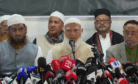

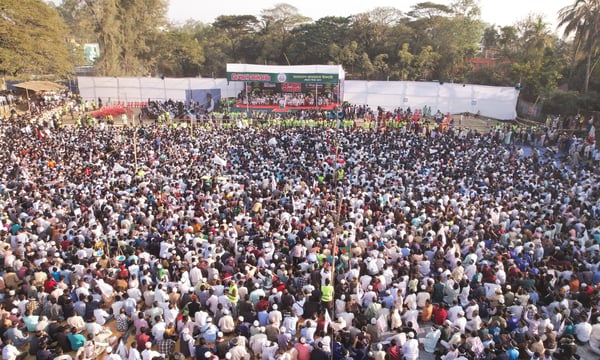
Bangladesh Jamaat-e-Islami Ameer Shafiqur Rahman addresses an election rally in Chattogram district, Bangladesh, Feb. 2, 2026.
For 15 years, Bangladesh’s government was viewed as a firm bulwark against religious extremism. Prime Minister Sheikh Hasina had cracked down heavily on the country’s largest Islamist party, Jamaat-e-Islami, as well as various radical and jihadist outfits.
Really, Hasina cracked down on everyone – but to some, her authoritarian bent was an acceptable price to pay to keep religious extremism under wraps.
So when Hasina’s Awami League government was ousted from power on August 5, 2024, it triggered a wave of deep anxiety. Many feared that Islamists in Bangladesh would now have free rein. India, especially, was horrified by the prospect of its eastern neighbor becoming a safe haven for Islamist extremist groups – some of which might dream of carrying out terrorist attacks on Indian soil.
Now, two years after the collapse of Hasina’s government, Jamaat-e-Islami has made a spectacular return to parliamentary politics. Radical groups are mobilizing, and there are escalating attacks against religious minorities.
Does that mean fears about Bangladesh’s Islamist explosion have come true? Not exactly.
Subscribe today and join thousands of diplomats, analysts, policy professionals and business readers who rely on The Diplomat for expert Asia-Pacific coverage.
Get unlimited access to in-depth analysis you won't find anywhere else, from South China Sea tensions to ASEAN diplomacy to India-Pakistan relations. More than 5,000 articles a year.
Get briefed on the story of the week, and developing stories to watch across the Asia-Pacific.