
- 0
- 817 words
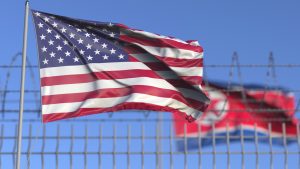
Since the COVID-19 border closures sealed North Korea off from the world, and as the China-Russia-North Korea axis has deepened, the North Korean people have become more isolated and vulnerable than at any point in recent memory. In this grim period, one piece of encouraging news stands out: last month, U.S. Senators Tim Kaine (D-VA) and Dan Sullivan (R-AK) introduced the bipartisan North Korean Human Rights Reauthorization Act (NKHRA).
Growing up in North Korea, America was my enemy – alongside South Korea, the U.S. is one of the two principal adversaries the state taught us to despise. I was taught that American missionaries had pressed the word “thief” into an innocent boy’s forehead with caustic acid. We called Americans “wolf-like Yankee imperialists” and were told they sought to swallow the Korean peninsula whole.
When I escaped in 2013, I carried that conditioning with me – until American volunteers with no family ties to North Korea, no personal stake, no obligation, wept and prayed alongside me for the family I had left behind. And as I slowly learned the truth about the outside world, I discovered something that humbled me entirely: the very government I had been raised to fear had passed the North Korean Human Rights Act in 2004, becoming the first country in the world to formally recognize that what was happening inside North Korea was not merely a political problem, but ongoing crimes against humanity. The Americans had been fighting for people they would never meet, in a country they were prohibited from entering, for decades.
The North Korean Human Rights Act, or NKHRA, expired in 2022.
On June 25, Senators Kane and Sullivan reintroduced the NKHRA, signaling Congress’s continued commitment to advancing the rights of the North Korean people. This effort to revive the NKHRA legislation is part of a long bipartisan tradition. In the House of Representatives, Representative Young Kim (R-CA) and many others have worked persistently to reauthorize the NKHRA . And as a congressional staffer explained during a meeting at this year’s North Korean Young Leaders Assembly (NKYLA), the gap since 2022 has not reflected a lack of American commitment to North Korean human rights – the tenure of Special Envoy Julie Turner from 2023 to 2025 demonstrated that clearly – but rather is a matter of timing between the legislative and executive branches. The commitment has endured; the legal architecture must now be restored.
The 2025 update to the U.N. Commission of Inquiry on Human Rights in the DPRK confirmed that conditions inside North Korea have deteriorated sharply. Consuming foreign media can now result in public execution. Political prison camps continue to hold tens of thousands under conditions amounting to ongoing crimes against humanity. The deepening alignment of China’s Xi Jinping, Russia’s Vladimir Putin, and North Korea’s Kim Jong Un has further shielded the regime from international accountability – and as that axis tightens, the window for outside engagement with the North Korean people grows narrower.
Reauthorizing the NKHRA is the right first step. But it should be accompanied by meaningful action across several fronts.
First, the NKHRA should expand support for information access. A single piece of outside information can dismantle years of state indoctrination. As North Korea’s isolation deepens, the quality of information reaching its people matters as much as the quantity. Future efforts should prioritize substantive content that helps ordinary North Koreans understand the failures of their own political, economic, and social systems – equipping them not only to question what they have been told, but to envision what a different Korea could look like.
Second, the United States and South Korea should simultaneously appoint special envoys for North Korean human rights – positions that have both sat vacant for years. The previous pairing of U.S. Special Envoy Julie Turner and South Korean Special Envoy Lee Shin-wha demonstrated what coordinated bilateral engagement can achieve. That synergy must be restored.
Third, young North Korean defectors, such as members of NKYLA – now professionals, researchers, lawyers, and civic leaders in democratic societies – must be brought into the policy process as genuine partners, not symbolic witnesses.
Finally, the forced repatriation of North Korean refugees in China must remain a central concern of international human rights diplomacy. Every North Korean returned to the regime faces severe punishment – often imprisonment or death. Greater international attention and explicit provisions in the reauthorized Act can raise the diplomatic cost for China of continuing this practice.
America was the first country to legislate on behalf of the North Korean people. It did so not because North Koreans asked but because the United States chose to see our humanity when our own government denied it. To the senators, representatives, and American citizens who have sustained this commitment across more than two decades: on behalf of those who cannot yet speak for themselves, thank you. The North Korean people see what you have done, even when they cannot thank you themselves.
Author
